Online Study Guide
Instructions
1) You
do not need to type in your name in the space in the top-left area above. The results of this study
guide will not be sent to your teacher.
2) Carefully read each question and all the answer
choices.
3) Select the correct letter from the drop-down feature to the left of each
question.
4) When you are finished, click the “Check Your Work” button in the
bottom-left corner of the page.
5) The software will grade your work, and then it will show
you the results. Note that the correct answer will be displayed beneath the questions.
6)
Keep doing the study guide over until you earn a 100 on it.
|
|
|
1.
|
Snakes have adapted to many different environments
on planet Earth. The Eastern Diamondback Rattlesnake, for instance, is found throughout the
South-Eastern United States.Eastern Diamond
Rattlesnake
Crotalus adamanteus | | |
Identify one key structural
adaptations possessed by rattlesnakes.
a. | These snakes have rattles on their tails to warn away
predators. | b. | Serpents such as
this will lie on warm rocks that have been heated by the sun. | c. | Rattlesnakes will swim across small streams to get to the other
side. |
|
|
|
2.
|
One structural adaptation displayed by plants is
the shape and size of their leaves. Different plant species have different shaped leaves depending on
their environment.
Which diagram below
most likely shows an adaptation that increases the chances
of survival of a plant in a hot, dry climate?
a. | 
Maple Tree
Leaf | b. | 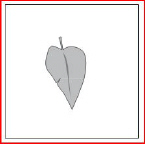
Wild Yam
Leaf | c. | 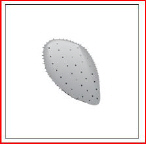
Cactus
Leaf |
|
|
|
3.
|
Closely examine the pictures of the animal shown
below.
Cheetah
(Acinonyx jubatus) | | 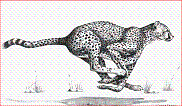 | | | | |
Identify two
structural adaptations possessed by this animal. a. | Cheetahs can run very fast. They are excellent hunter
that sprint to capture their prey. | b. | They have very
long ears, and they have short but powerful tails for swimming. | c. | They have long leg bones, and they have spots for
camouflage. |
|
|
|
4.
|
Alligators are carnivorous reptiles. One behavioral
adaptation they display is ambushing animals that come down to the water’s edge. Two structural
adaptations they have is nostrils on top of their long snouts and eyes located high up on their
skulls. These two adaptations allow alligators to float in the water with most of their body hidden
beneath the surface.
Where would you most likely expect to find reptiles with these types of
adaptations?
a. | a murky
swamp | b. | a deciduous
forest | c. | frozen
tundra |
|
|
|
5.
|
All organisms including fish, mammals, reptiles,
birds, insects, and bacteria adapt to their specific habitats by changing their behavior or their
body structure or both.
Which of the following behavioral adaptations is best suited
for survival in an environment with harsh, extremely cold, and long winters?
a. | webbed feet | b. | hibernation | c. | defensive behavior |
|
|
|
6.
|
Some characteristics of a plant are listed below.
(1) Short, thick stem.
(2) Small, plump leaves
covered by a waxy coating.
(3) Roots grow close to the surface of the ground
For which
environment is this plant most likely adapted? a. | desert | b. | coniferous forest | c. | Arctic tundra |
|
|
|
7.
|
In the savannas of East Africa, trees are scarce
and their leaves are up high in the tallest branches. Many plant eating animals compete to eat
the best leaves on these trees.
Trees of the African Savanna | | | | | | |
Which
adaptation would most likely help a population of ground-dwelling organisms survive in this
environment?
a. | large shell and leathery skin | b. | long necks and tall legs | c. | light colored fur
and layers of blubber |
|
|
|
8.
|
All organisms must adapt to their environment in
order to survive and reproduce. If an organism can not adapt to a change in its environment then it
will die. If too many of the individuals die then the entire species will go extinct.
Which of
the following events would most likely cause a rapid extinction of organisms?
a. | A gradual decrease in the growth of weeds in a meadow
over a 1000 year time period. | b. | A large asteroid
impact could cause extinctions due to fast changes in the environment | c. | Formation of a new glacier would cause extinctions due to the slow changes to
the environment |
|
|
|
9.
|
Some birds such as hummingbirds take nectar from flowers for food.
Select one
significant structural adaptation possessed by hummingbirds.a. | Hummingbirds have long-thin beaks that they insert into
flowers to get nectar. | b. | These birds often
hover in place by beating their wings very fast. | c. | These birds have large talons that they use to capture prey to eat.
|
|
|
|
10.
|
A young crocodile is basking in the warm
sunlight. | | |
How is this an example of a behavioral
adaptation? a. | The reptile is using solar radiation to heat up
its body to allowing it to move faster. | b. | Its nostrils are on top of its snout enabling it to breath air with
most of its body under water. | c. | The crocodile has
a powerful jaw, hard bony scales on its back, and a strong
tail. |
|